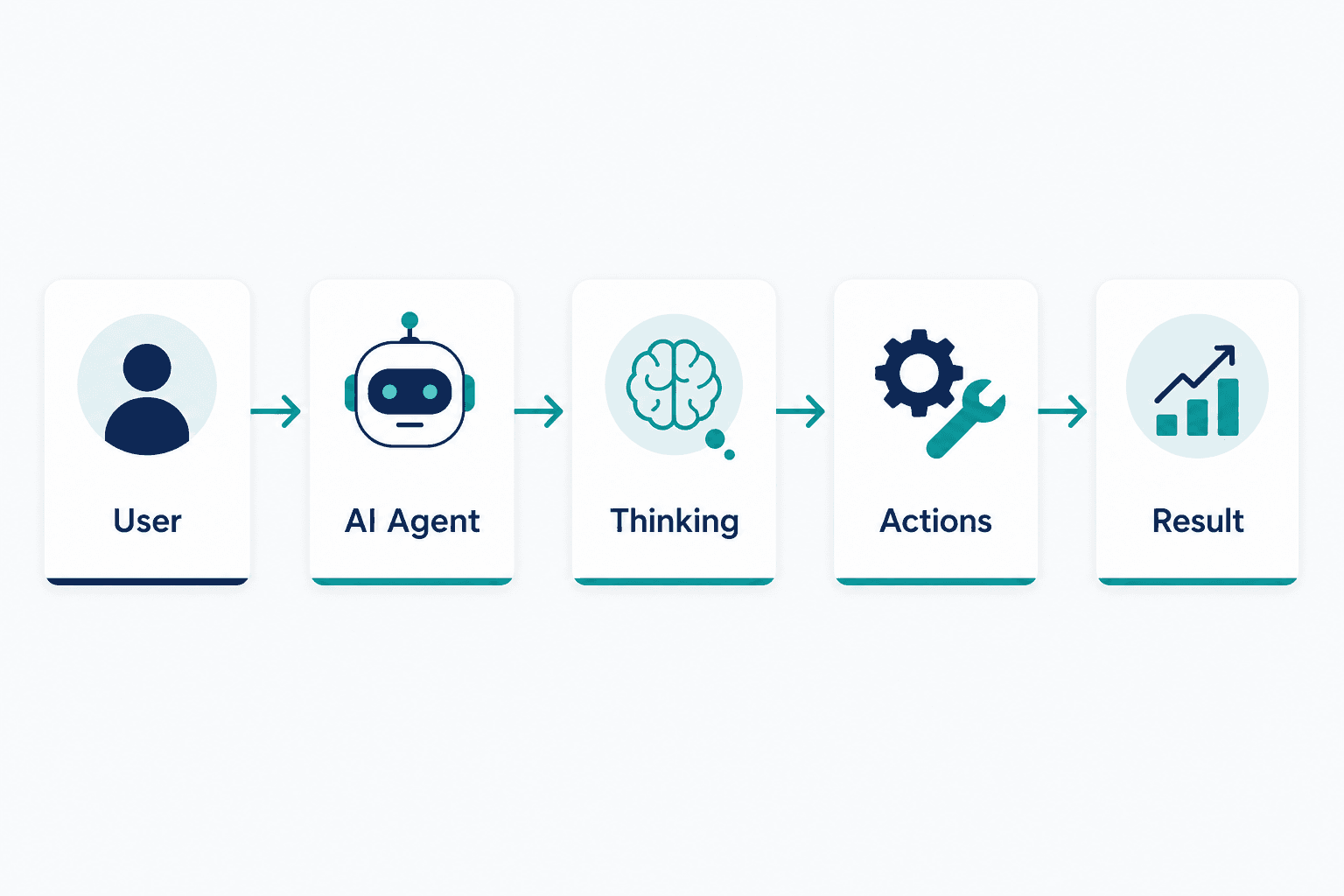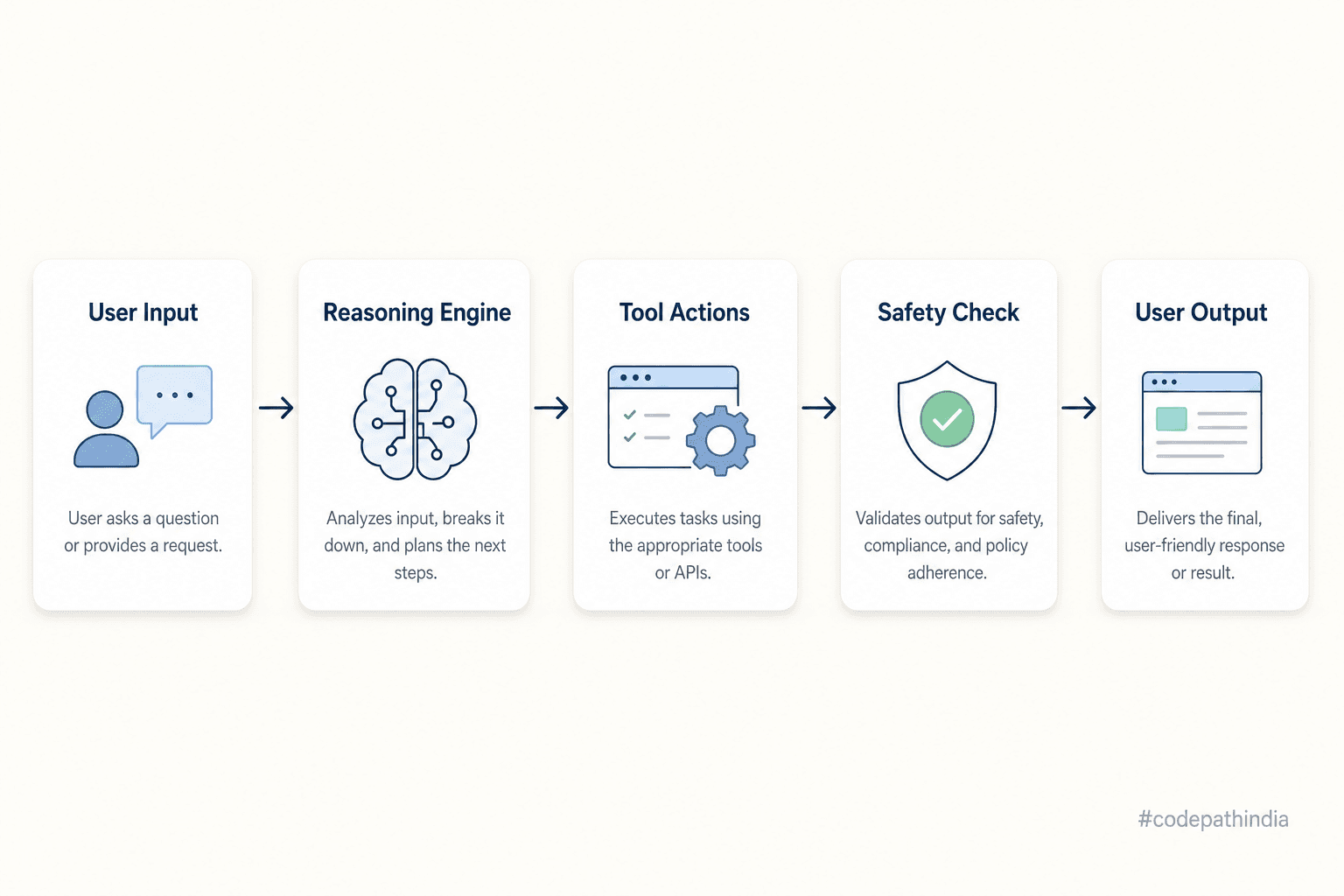
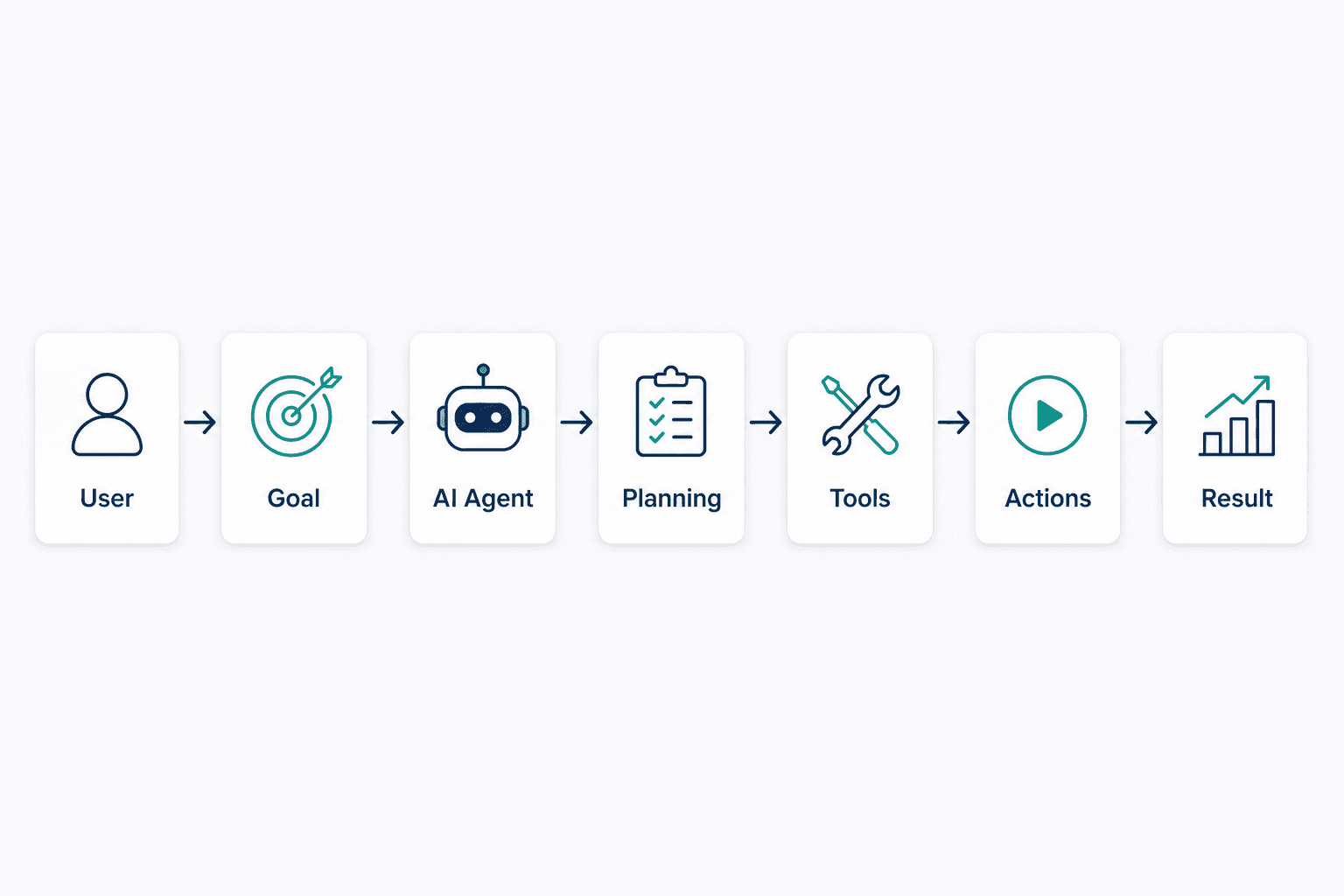
Abstract illustration of connected steps suggesting an agent loop

Agentic AI

Ideas you can explain to a teammate—then wire carefully in code · 5 articles

Start here if the phrase sounds louder than the meaning

Most people bump into “agentic AI” right after they finally got comfortable with “the model writes text.” The shift is smaller than the marketing makes it sound: you are still shipping an ordinary application—routing, validation, permissions, storage—but you allow one corner of the system to propose a small plan before it touches the outside world. Want a single article-sized version of this idea first? Read What is Agentic AI? A beginner-friendly guide. For what actually sits inside that loop—the agent itself—continue with What is an AI Agent?.

Think of it like giving a careful coworker a checklist instead of a blank page. They might draft steps, call an internal API, look something up, or ask for clarification. Your job is not to pretend the coworker is infallible; your job is to draw bright lines around what they may do, log what they did, and roll back when the plan wanders.

A loop you can sketch on a whiteboard

Nothing here requires magic—only patience. Each lap around the loop should leave a trace you would not be ashamed to show during an incident review.

SenseRead the user message, ticket, or event—never trust it blindly.
DecidePick the next safe move: answer, ask, or call a tool you allowlisted.
ActRun the tool or query with the same limits you would give a junior on call.
RememberStore outcomes and errors so the next lap does not repeat the same mistake quietly.

How this differs from “just a chatbot”

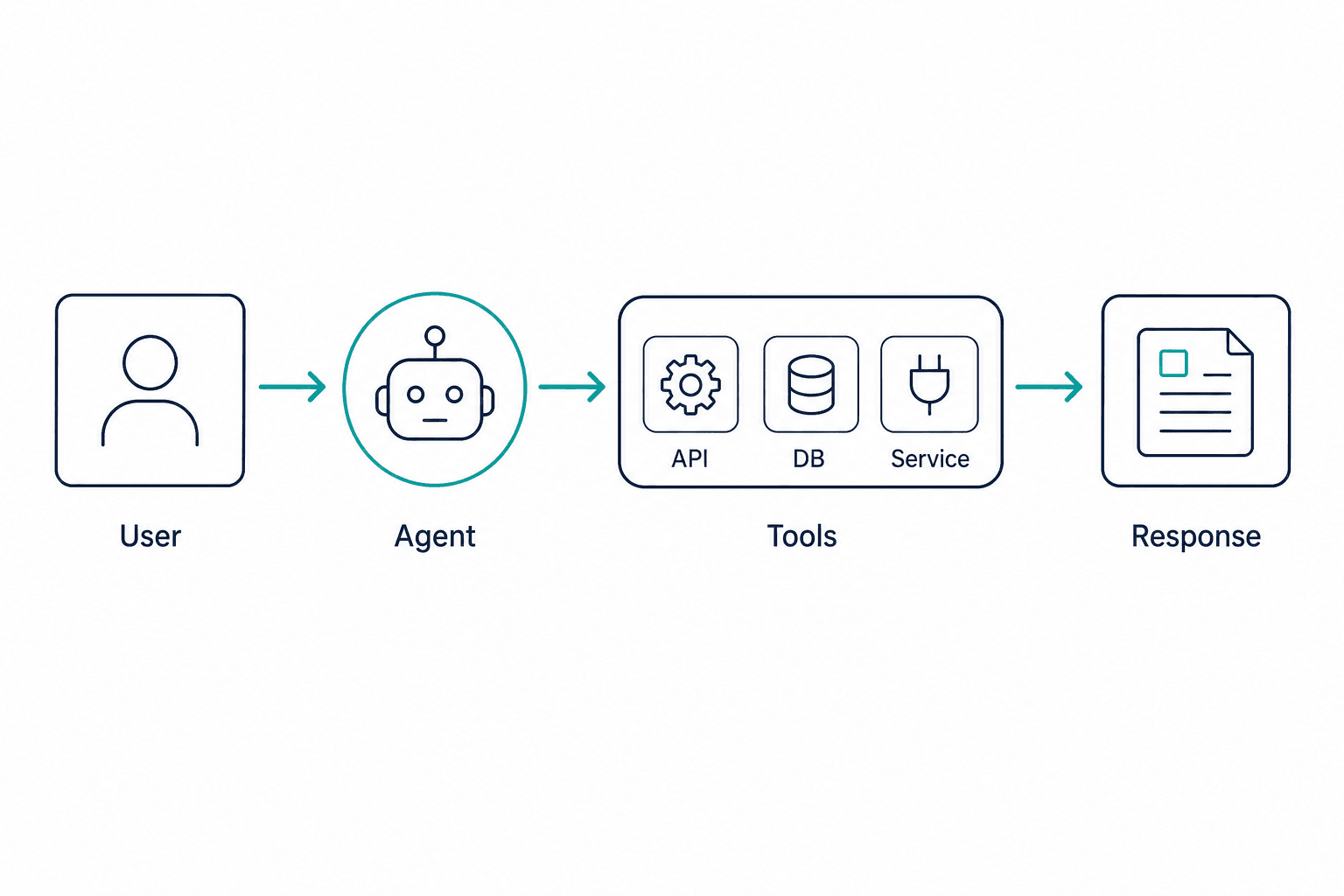
A chat-style assistant stops at helpful sentences. An agent-shaped setup may also trigger actions: opening a ticket, fetching a row, enqueueing work, or drafting a patch. The moment actions exist, you are back in familiar engineering territory—timeouts, retries, partial failures, and angry finance if numbers move without approval.

That is why this blog keeps returning to Spring Boot and PostgreSQL: they are where adults store truth. Models suggest; your schema, constraints, and audit trails decide what actually happened.

Who this track is for

  • You ship backends and want vocabulary that matches how teams really build—not slide decks that skip the database.
  • You are curious about tool calling and planning, but you want the discussion anchored in APIs you can test with curl or Postman.
  • You already read the hype cycle once and prefer steady explanations over breathless superlatives.
What is Agentic AI? A beginner-friendly guide
Read More →

What is Agentic AI? A beginner-friendly guide

Learn what agentic AI is in plain English: how it differs from a normal chat reply, from a chatbot, and from generative AI alone—with examples, diagrams, why it is trending, and real-world use cases.

April 28, 2026
Learn more
What is an AI Agent? LLM, tools, memory, planning
Read More →

What is an AI Agent? LLM, tools, memory, planning

A plain-language look at AI agents, goal-based and autonomous vs semi-autonomous setups, plus a hands-on Java section: AgentTool, SearchTool, AgentMemory, Planner, AIAgent, and Main under com.codepathindia.agenticai (no Spring, simulated LLM).

April 29, 2026
Learn more
Agentic AI – Part 3: Agent Architecture
Read More →

Agentic AI – Part 3: Agent Architecture

Beginner-friendly guide to agentic AI architecture: input, reasoning, action, output; planner, executor, and critic agents; multi-agent systems; plus plain Java under com.codepathindia.agenticai with mapping and pitfalls.

May 01, 2026
Learn more
Important components in agentic AI — LLM, tools, memory, vectors, and RAG
Read More →

Important components in agentic AI — LLM, tools, memory, vectors, and RAG

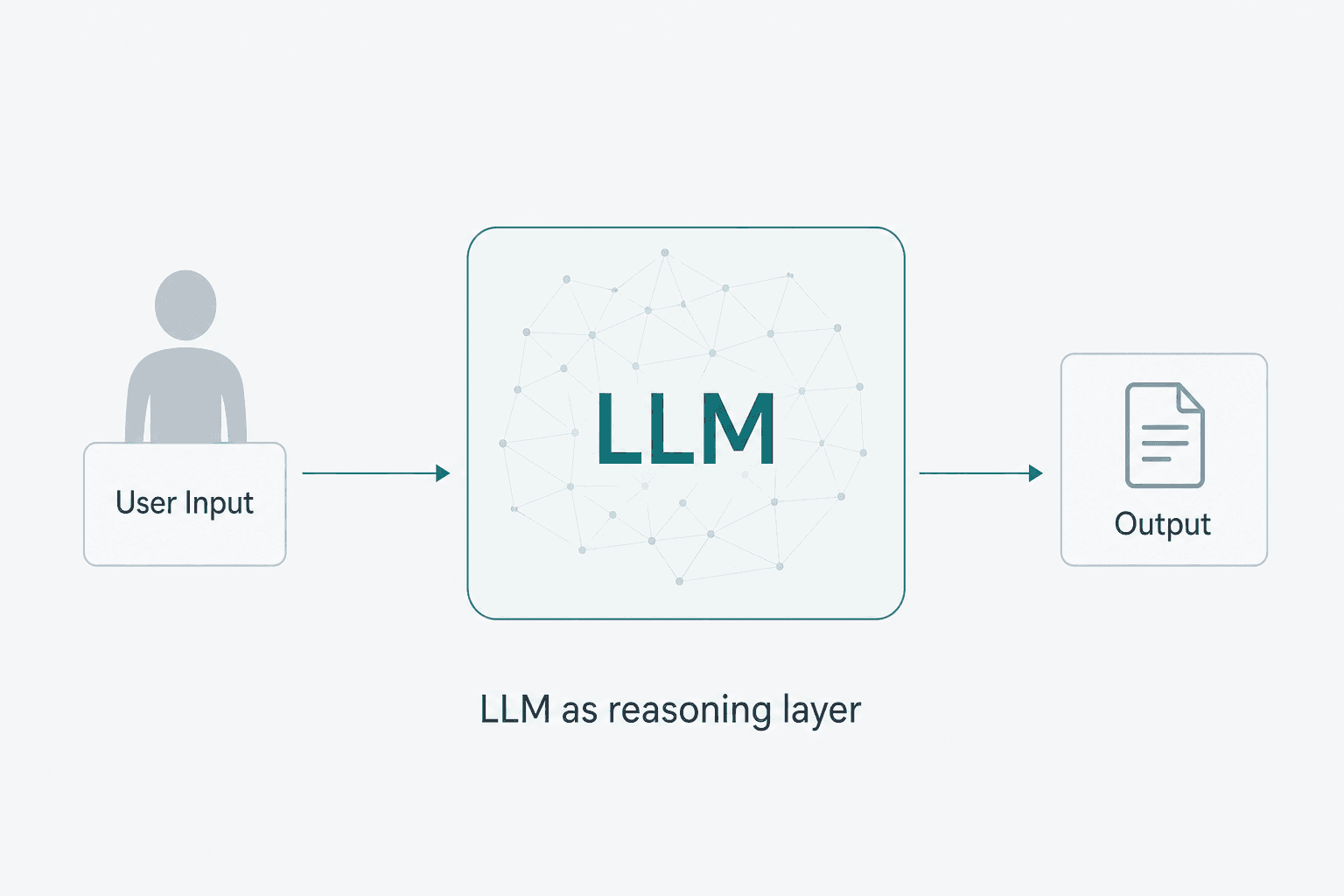
What really sits inside agentic AI: the LLM as reasoning layer, tools as actions, short and long memory, vector search, and RAG—with plain Java sketches and topic illustrations.

May 02, 2026
Learn more
Agentic AI — Part 5: Tools & function calling
Read More →

Agentic AI — Part 5: Tools & function calling

What tool calling is, how function calling ties models to your code, calling APIs safely from agents, and patterns for web search, code execution, and database agents—in plain English with step-by-step walkthroughs, topic illustrations, and Java sketches.

Learn more

Browse the main Java learning path for core language topics alongside this series.